
AA Lithium-Ion Battery Manufacturer
Modern industries rely on dependable battery solutions for their products. Smart home devices, wireless sensors, medical equipment, and industrial automation systems require batteries with consistent quality and stable performance. AplicBattery provides reliable AA Lithium-Ion Battery solutions designed for OEM customers and product manufacturers.

Selecting the right AA Lithium-Ion Battery Manufacturer is no longer simply about finding a supplier with competitive pricing. When selecting a battery supplier, OEM companies typically evaluate several key factors that directly influence product reliability, production efficiency, and long-term business success.
- Engineering Expertise – Technical knowledge to support battery selection, system integration, and application optimization.
- Reliable Production Capacity – Scalable manufacturing capability to ensure consistent supply from prototype development to mass production.
- Strict Quality Assurance – Comprehensive quality control processes to maintain stable performance and reliability across production batches.
- International Certifications – Compliance support to help products meet global safety and market requirements.
- Technical Partnership – An experienced engineering team that understands battery technology and provides support throughout product development.
Whether you are developing a new electronic device or upgrading an existing product, choosing the right battery supplier is essential for long-term success. For companies replacing disposable alkaline batteries with rechargeable alternatives, an experienced manufacturer can provide reliable and optimized battery solutions. If you are launching your own private-label battery brand, working with a qualified partner helps reduce development risks, improve product performance, and strengthen market competitiveness.

Our manufacturing team specializes in high-performance rechargeable lithium battery solutions designed for OEM, ODM, and private-label customers worldwide. Every battery is manufactured using carefully selected Grade-A lithium-ion cells, advanced production equipment, and comprehensive quality control procedures to ensure stable performance throughout its service life.
Rather than supplying standard batteries alone, we partner with global customers to develop customized power solutions tailored to their specific applications, electrical requirements, mechanical limitations, certification needs, and commercial objectives.
Why Choose a Professional Smart AA Battery Manufacturer?
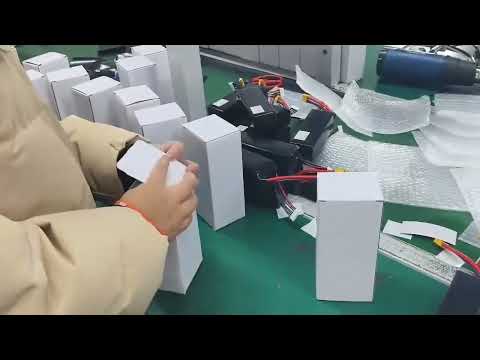
Today's battery market has become increasingly competitive. Businesses are no longer purchasing batteries solely based on capacity or price. Procurement managers, product engineers, and sourcing specialists now evaluate manufacturing capability, engineering resources, production consistency, compliance documentation, and supply chain reliability before selecting a battery partner.
As a professional smart AA battery manufacturer, we combine advanced lithium-ion technology with practical engineering experience to deliver rechargeable battery solutions that meet demanding commercial and industrial requirements. Our manufacturing process focuses on product consistency, battery safety, long cycle life, and reliable electrical performance under various operating conditions.
Unlike commodity battery suppliers, our engineering team collaborates directly with customers throughout product development. We evaluate battery specifications, charging methods, enclosure dimensions, discharge characteristics, connector requirements, and protection circuitry to ensure every solution integrates seamlessly into the final product.
This collaborative approach helps OEM customers shorten development cycles, reduce technical risks, and accelerate product commercialization while maintaining exceptional product quality.
Engineering Support Beyond Manufacturing
Battery manufacturing involves much more than assembling lithium-ion cells. Every successful battery solution requires careful consideration of electrical engineering, mechanical integration, thermal management, charging behavior, safety protection, and production scalability.
Our engineering specialists assist customers with battery selection, product optimization, connector recommendations, PCM configuration, charging compatibility, and battery pack architecture. This technical support allows customers to avoid common engineering mistakes while maximizing battery efficiency throughout the product lifecycle.
Reliable Global Supply Chain
Supply chain stability has become one of the most important purchasing factors for international buyers. Manufacturing interruptions, inconsistent raw materials, and delayed shipments can significantly impact product launches and production schedules.
We maintain stable supplier relationships, standardized manufacturing procedures, and strict production planning to help customers minimize supply chain risks. Our global export experience enables efficient logistics coordination for distributors, wholesalers, OEM brands, and industrial manufacturers serving international markets.
Technical Specifications of AA Lithium-Ion Batteries
Understanding battery specifications is essential when selecting rechargeable lithium-ion batteries for commercial or industrial applications. Different products require different voltage characteristics, capacity ranges, charging methods, discharge currents, and environmental performance.
Although specifications may vary according to customer requirements, modern AA lithium-ion batteries generally provide significantly higher energy density than conventional rechargeable chemistries while maintaining stable output voltage and excellent cycle performance.
| Specification | Typical Value |
|---|---|
| Battery Chemistry | Lithium-Ion |
| Nominal Voltage | 3.6V / 3.7V |
| Charging Voltage | 4.2V |
| Typical Capacity | 1000mAh 3500mAh* |
| Recharge Cycle | 500, 1000+ Cycles* |
| Operating Temperature | -20C to 60C* |
| Protection | PCM / BMS Available |
| OEM Customization | Supported |
*Specifications vary depending on battery model and project requirements.
AA Lithium-Ion Rechargeable Batteries with High Energy Density
Our AA lithium-ion rechargeable batteries utilize premium lithium-ion chemistry that offers significantly higher energy density than many traditional rechargeable battery technologies. Higher energy density allows electronic devices to operate longer while maintaining a compact battery size and lightweight design.
This advantage makes lithium-ion batteries particularly suitable for portable electronics, handheld instruments, wireless communication equipment, smart devices, medical electronics, and industrial monitoring systems where operating time directly influences user experience and operational efficiency.
In addition to improved runtime, lithium-ion technology provides lower self-discharge characteristics, enabling batteries to retain stored energy during extended storage periods. This feature benefits emergency equipment, backup systems, security devices, and products that operate intermittently.
Stable Voltage Performance
Stable voltage output is one of the defining characteristics of modern lithium-ion batteries. Unlike disposable batteries that experience continuous voltage decline during discharge, lithium-ion technology maintains relatively consistent voltage over a substantial portion of the discharge cycle.
Stable voltage improves equipment reliability, enhances electronic circuit performance, and helps sensitive devices maintain consistent functionality until battery replacement or recharging becomes necessary.
Long Cycle Life
Battery longevity directly affects total ownership cost. High-quality rechargeable batteries significantly reduce replacement frequency, maintenance expenses, and environmental waste generated by disposable battery consumption.
Our manufacturing process emphasizes premium materials, accurate cell matching, optimized charging characteristics, and comprehensive production control to maximize cycle life while preserving capacity retention throughout repeated charging cycles.
Safety and Protection Technology
Battery safety remains one of the highest priorities for OEM manufacturers and international buyers. Modern lithium-ion batteries incorporate advanced protection technologies designed to prevent abnormal charging conditions, excessive discharge, short circuits, and overcurrent events.
Depending on project requirements, customized protection circuits, battery management systems (BMS), or PCM solutions can be integrated to enhance product reliability and operational safety.
Applications Across Multiple Industries
Rechargeable lithium-ion batteries continue replacing disposable battery technologies across numerous industries due to their superior energy efficiency, reduced operating costs, and environmental advantages. Businesses increasingly seek reliable battery partners capable of supporting diverse product applications while meeting industry-specific performance expectations.
Rechargeable AA Li-Ion Batteries for Smart Electronics
Our rechargeable AA Li-ion batteries power a wide variety of smart electronic products, including intelligent home systems, wireless controllers, portable consumer devices, electronic locks, voice assistants, remote monitoring equipment, and connected appliances.
As Internet of Things (IoT) adoption accelerates worldwide, demand continues growing for compact rechargeable batteries capable of delivering reliable long-term performance while supporting low-power electronic architectures.
Industrial Automation Equipment
Industrial automation increasingly relies on dependable rechargeable power solutions for portable testing equipment, barcode scanners, wireless monitoring systems, handheld terminals, instrumentation devices, and remote sensing technology.
Stable battery performance minimizes equipment downtime while improving productivity across manufacturing environments where uninterrupted operation remains essential.
Medical Devices
Portable medical electronics require dependable battery performance, consistent voltage delivery, and strict manufacturing quality. Lithium-ion technology supports numerous medical applications including diagnostic equipment, monitoring systems, portable analyzers, wearable healthcare devices, and patient mobility products.
Every application requires careful engineering evaluation to ensure battery performance aligns with product safety requirements and regulatory expectations.
Security and Surveillance Systems
Security devices frequently operate under demanding environmental conditions while requiring continuous standby capability. Rechargeable lithium-ion batteries provide dependable backup power for surveillance equipment, wireless alarms, smart access control, portable inspection devices, and emergency communication systems.
Consumer Electronics
Modern consumers expect longer battery life, faster charging, lighter products, and environmentally responsible technology. These expectations continue driving manufacturers toward rechargeable lithium-ion battery solutions that combine compact dimensions with excellent energy efficiency.
Whether supporting portable entertainment products, smart accessories, educational electronics, gaming peripherals, or professional handheld equipment, lithium-ion technology remains one of the preferred rechargeable power solutions for next-generation consumer products.
OEM & ODM Battery Manufacturing Solutions
For many global brands, purchasing a battery is only one part of the product development process. The greater challenge is finding a manufacturing partner capable of transforming technical requirements into a reliable, scalable, and market-ready power solution.
As an experienced li-ion AA battery manufacturer, we provide complete OEM and ODM manufacturing services for customers developing consumer electronics, industrial equipment, medical devices, IoT products, smart home systems, security solutions, and portable electronic devices.
Our engineering philosophy extends beyond supplying standard batteries. Every OEM project begins with understanding the customer's application, electrical specifications, product dimensions, charging characteristics, regulatory requirements, and expected product lifecycle. This collaborative approach helps reduce engineering risks while improving overall product reliability.
Custom AA Lithium Battery Packs for Specialized Applications
Every electronic product has different power requirements. Off-the-shelf batteries may not always provide the ideal solution for demanding commercial applications. Our custom AA lithium battery packs are engineered specifically to match customer requirements for voltage, capacity, dimensions, wiring, connectors, protection circuits, and enclosure configurations.
Whether your project requires a single-cell solution or a multi-cell battery pack, our engineering team can develop customized configurations that integrate seamlessly into your final product while maintaining excellent safety and long-term performance.
Customization options include:
- Battery pack configuration
- Voltage customization
- Capacity optimization
- Connector selection
- Wire harness assembly
- Protection Circuit Module (PCM)
- Battery Management System (BMS)
- Temperature sensor integration
- NTC installation
- Custom housing design
- Private labeling
- Retail packaging
Private Label Manufacturing
Many distributors and international brands prefer selling products under their own trademarks. Our private label manufacturing services allow customers to establish their own rechargeable battery brands without investing in production facilities.
From logo printing and customized packaging to multilingual labeling and retail-ready presentation, we help customers strengthen their brand identity while maintaining consistent manufacturing quality throughout every production batch.
Flexible OEM Production Capacity
Business requirements evolve over time. Some customers begin with prototype quantities, while others require large-scale production immediately. Our manufacturing system supports flexible production planning that accommodates both small development projects and high-volume commercial manufacturing.
By combining automated production equipment with standardized quality control procedures, we maintain stable product consistency regardless of production volume.
Advanced Battery Manufacturing Process
High-quality rechargeable batteries are not created by chance. Consistent performance results from carefully controlled manufacturing procedures, precision engineering, automated production equipment, and comprehensive quality management systems.
Every battery manufactured in our facility follows standardized production workflows that emphasize traceability, process control, and continuous quality improvement.
1. Grade-A Cell Selection
Battery performance begins with the quality of individual lithium-ion cells. We source Grade-A cells from qualified suppliers that meet strict standards for capacity consistency, internal resistance, voltage stability, and long-term reliability.
Incoming materials undergo detailed inspection before entering production. Cells that fail to meet predefined quality criteria are rejected before assembly begins.
2. Incoming Quality Inspection (IQC)
Every production batch undergoes Incoming Quality Control (IQC) to verify electrical performance and physical integrity before manufacturing.
- Voltage verification
- Capacity measurement
- Internal resistance testing
- Visual inspection
- Dimensional measurement
- Supplier traceability verification
3. Cell Matching
For battery packs containing multiple cells, matching is one of the most important manufacturing stages.
Cells with similar voltage, capacity, and internal resistance are grouped together to improve discharge balance, maximize service life, and enhance overall battery stability.
Accurate cell matching contributes directly to longer cycle life and more consistent battery performance.
4. Precision Spot Welding
Automated spot welding equipment ensures reliable electrical connections while minimizing thermal stress on lithium-ion cells.
Proper welding techniques improve electrical conductivity, reduce resistance losses, and enhance mechanical durability throughout the battery's operational lifetime.
5. Battery Assembly
Following cell preparation, components including nickel strips, connectors, insulation materials, wiring, PCM modules, and protective housings are assembled according to engineering specifications.
Every assembly stage follows documented production procedures to maintain consistency across all manufacturing batches.
6. Aging Process
Completed batteries undergo an aging process before final inspection. During this stage, batteries are charged and discharged under controlled conditions to stabilize electrochemical performance while identifying potential manufacturing defects before shipment.
The aging process significantly improves long-term reliability and helps eliminate early-life failures.
7. Final Inspection
Before packaging, every production batch undergoes comprehensive inspection covering appearance, dimensions, electrical characteristics, safety functions, labeling accuracy, and packaging quality.
Only products that successfully pass all inspection requirements proceed to shipment.
Comprehensive Quality Assurance System
Quality assurance is one of the most critical factors influencing battery performance, product safety, and customer satisfaction. International buyers increasingly evaluate manufacturing partners based on documented quality systems rather than simply comparing product prices.
Our quality management philosophy emphasizes prevention instead of correction. Every production stage includes inspection checkpoints designed to identify potential issues before they affect finished products.
Capacity Verification
Battery capacity directly determines operating time. Every production batch undergoes controlled charge and discharge testing to verify actual capacity against engineering specifications.
This testing ensures customers receive batteries capable of delivering consistent runtime across large production quantities.
Internal Resistance Testing
Internal resistance influences discharge performance, heat generation, charging efficiency, and long-term battery health.
Advanced testing equipment measures internal resistance to identify abnormal cells before shipment, helping improve battery consistency while reducing field failures.
Cycle Life Evaluation
Long-term reliability cannot be determined through a single charging cycle. Our engineering team performs cycle life testing to evaluate battery performance across repeated charging and discharging conditions.
This data supports product development while helping customers estimate battery lifespan under practical operating environments.
Safety Performance Testing
Battery safety remains an essential requirement across global markets. Depending on project requirements, safety evaluations may include:
- Overcharge testing
- Over-discharge testing
- Short circuit testing
- Thermal performance evaluation
- Current protection verification
- Mechanical inspection
These procedures help verify product integrity before commercial deployment.
100% Visual Inspection
Every finished battery undergoes visual inspection to ensure proper labeling, connector installation, insulation quality, printing accuracy, and cosmetic appearance.
Attention to these details helps customers maintain consistent brand presentation while reducing quality concerns during product assembly.
Engineering Support Throughout Product Development
Developing a successful battery-powered product often requires close collaboration between manufacturers and engineering teams. Rather than functioning solely as a production supplier, we work alongside customers throughout every stage of product development.
Our engineers assist with battery selection, electrical compatibility, charging methods, thermal management, protection circuitry, connector recommendations, and mechanical integration to ensure optimal system performance.
Rapid Prototype Development
Before mass production begins, prototype batteries allow customers to validate product performance, evaluate integration, and perform application-specific testing.
Rapid prototyping helps shorten development cycles while minimizing engineering revisions during later production stages.
Technical Consultation
Our engineering specialists provide technical consultation covering battery chemistry selection, charging profiles, discharge characteristics, connector configurations, transportation requirements, and production feasibility.
This collaborative engineering process enables customers to make informed decisions before committing to full-scale manufacturing.
Long-Term Manufacturing Partnership
Many of our customers continue working with us long after product launch. As production volumes increase and new product generations emerge, we provide ongoing engineering improvements, manufacturing optimization, and supply chain support that help maintain consistent product quality while reducing operational risks.
Battery Certifications and International Compliance Standards
For global B2B buyers, battery quality is not determined only by electrical performance. Compliance with international transportation, safety, and environmental standards is a critical factor when selecting a reliable manufacturing partner.
A professional lithium ion AA battery manufacturer must understand the regulatory requirements of different markets and provide proper documentation to support product approval, import procedures, and customer compliance obligations.
Our manufacturing process is designed around internationally recognized quality principles, helping customers develop rechargeable battery products suitable for commercial distribution across Europe, North America, and other global markets.
UN38.3 Transportation Safety Testing
Lithium batteries are classified as regulated goods for international transportation. UN38.3 testing evaluates battery safety performance during shipping conditions, including altitude simulation, thermal testing, vibration, shock, external short circuit, impact, and overcharge scenarios.
Proper UN38.3 documentation helps customers simplify international logistics while reducing risks associated with battery transportation compliance.
IEC 62133 Battery Safety Standard
IEC 62133 is one of the most recognized international standards for rechargeable lithium battery safety. It evaluates battery behavior under various abnormal conditions to ensure products meet established safety expectations.
For companies selling products in regulated markets, compliance with IEC 62133 provides additional confidence regarding battery reliability, manufacturing quality, and user safety.
CE and European Market Requirements
Companies supplying products into European markets must consider applicable CE requirements and related product compliance responsibilities.
A qualified battery supplier understands the importance of technical documentation, product traceability, and manufacturing consistency required for successful market distribution.
RoHS and Environmental Responsibility
Environmental responsibility has become increasingly important for international buyers. RoHS compliance helps ensure electrical and electronic products limit the use of restricted hazardous substances.
By considering environmental requirements during material selection and manufacturing processes, battery suppliers can better support customers seeking sustainable product solutions.
MSDS and Technical Documentation Support
Professional documentation is essential for smooth international business operations. Depending on customer requirements, battery projects may require documentation such as:
- Material Safety Data Sheet (MSDS)
- Battery Specification Sheet
- Test Reports
- Quality Inspection Reports
- Transportation Documents
- Product Traceability Records
Complete technical documentation helps distributors, OEM brands, and system integrators manage compliance requirements more efficiently.
Why Global B2B Buyers Choose Our Battery Manufacturing Services
Selecting a battery supplier is a strategic business decision. Poor battery quality can damage product reputation, increase warranty costs, interrupt production schedules, and create unnecessary operational challenges.
For this reason, experienced buyers evaluate manufacturers based on technical capability, production reliability, quality systems, communication, and long-term partnership potential.
Our manufacturing approach is designed to support companies that require dependable rechargeable battery solutions with professional engineering assistance.
Advantages for International Customers
- Experienced Battery Engineering Team
Technical support for battery selection, customization, and product integration. - OEM and ODM Manufacturing Capability
Flexible production solutions for startups, distributors, and established brands. - Grade-A Lithium-Ion Cells
Consistent materials selected for reliability and long-term performance. - Custom Battery Pack Development
Solutions designed according to application requirements and mechanical limitations. - Strict Quality Control
Comprehensive testing procedures throughout the manufacturing process. - International Export Experience
Support for global customers requiring reliable logistics and documentation. - Long-Term Partnership Approach
Continuous technical support beyond the initial production order.
Whether you are a product manufacturer, distributor, engineering company, or technology brand, choosing the right battery partner can significantly influence your product's success in competitive markets.
Frequently Asked Questions About AA Lithium-Ion Batteries
What is an AA lithium-ion battery?
An AA lithium-ion battery is a rechargeable battery using lithium-ion chemistry in an AA-sized format. Compared with traditional alkaline batteries, lithium-ion versions typically provide higher energy density, longer cycle life, and more stable voltage performance.
Are AA lithium-ion rechargeable batteries better than alkaline batteries?
For applications requiring frequent use, rechargeable AA lithium-ion batteries can provide significant advantages through lower operating costs, longer service life, reduced waste, and more consistent electrical output.
Can you manufacture custom AA rechargeable batteries?
Yes. Custom solutions can include capacity adjustment, connector selection, PCM/BMS integration, wiring configuration, packaging, labeling, and mechanical customization based on customer requirements.
What industries use rechargeable AA lithium-ion batteries?
Rechargeable AA lithium-ion batteries are commonly used in smart electronics, IoT devices, medical equipment, industrial instruments, security systems, wireless sensors, consumer electronics, and portable professional equipment.
Do you provide OEM and private label battery manufacturing?
Yes. OEM customers can receive customized production services including product branding, packaging design, battery specifications, and manufacturing support according to their business requirements.
What information is needed for a battery quotation?
To provide an accurate quotation, manufacturers typically require application details, required voltage, capacity, battery dimensions, estimated order quantity, connector requirements, certifications, and target market information.
How do you ensure battery quality?
Battery quality is controlled through multiple stages including cell inspection, electrical testing, capacity verification, internal resistance measurement, safety testing, production monitoring, and final inspection before shipment.
Can you support prototype development before mass production?
Yes. Prototype development allows customers to validate battery performance, mechanical integration, charging compatibility, and application requirements before moving into large-scale production.
What certifications are available for lithium-ion batteries?
Depending on application and market requirements, lithium-ion battery products may require certifications and documents such as UN38.3, IEC 62133, CE-related documentation, RoHS compliance, MSDS, and quality management records.
How can I start an OEM battery project?
The first step is to share your application requirements, battery specifications, expected quantity, and target market. Our engineering team can then recommend suitable battery solutions and provide technical guidance.
Partner with a Reliable AA Lithium-Ion Battery Manufacturer
The right battery supplier is more than a manufacturer. A reliable partner provides technical expertise, manufacturing consistency, quality assurance, and long-term support that helps businesses develop successful products.
As demand for rechargeable energy solutions continues expanding, companies need battery manufacturers capable of delivering customized solutions while maintaining strict quality standards and dependable supply capabilities.
From AA lithium-ion rechargeable batteries and OEM AA rechargeable batteries to advanced custom battery pack solutions, our manufacturing capabilities support businesses seeking reliable energy solutions for modern electronic applications.
Whether you are developing a new product, upgrading an existing battery system, or searching for a long-term manufacturing partner, our engineering team is ready to discuss your requirements and provide a suitable solution.
Request Your Custom Battery Solution Today
Tell us your battery requirements, application details, target specifications, and production expectations. Our engineering team will help evaluate your project, recommend the most suitable rechargeable battery solution, and provide professional manufacturing support.
Contact our team today to discuss your OEM, ODM, or custom lithium battery project.


